Education
Why Rural Children Deserve the Same Quality Education as Urban Students
In a world that is rapidly advancing through technology, innovation, and global connectivity, education has become the foundation of progress. Yet, a stark reality remains—while urban students often have access to world-class facilities, skilled teachers, and digital resources, millions of rural children are still struggling for basic educational opportunities.
This gap is not just unfair—it is a barrier to national development and human potential. Rural children do not lack intelligence, ambition, or dreams. What they lack is equal access. And that is precisely why they deserve the same quality education as their urban counterparts—not as a privilege, but as a fundamental right.
Equal Potential, Unequal Opportunities
Children are born with curiosity, creativity, and the ability to learn—regardless of where they come from. A child in a rural village has the same intellectual capacity as a child in a metropolitan city. However, the difference lies in the environment they grow up in.
Urban students benefit from:
- Advanced schools with modern infrastructure
- Exposure to extracurricular activities
- Access to the internet and digital learning tools
- Highly trained teachers
In contrast, many rural children face:
- Inadequate school facilities
- Shortage of qualified teachers
- Limited or no access to technology
- Long distances to reach schools
This imbalance creates a system where success is often determined by geography rather than ability.
Education is a Right, Not a Luxury
Quality education should never be determined by location. It is a basic human right that every child deserves. When rural children are denied the same quality education, it is not just an individual loss—it is a societal failure.
Providing equal education means:
- Equal access to learning resources
- Equal exposure to opportunities
- Equal chances of success
A nation cannot truly progress if a large portion of its population is left behind.
Breaking the Cycle of Rural Disadvantage
One of the biggest consequences of unequal education is the continuation of poverty. Without quality education, rural children often grow up with limited career options, leading to low-income jobs and restricted growth.
However, when rural children receive quality education:
- They gain skills for better employment
- They become financially independent
- They uplift their families and communities
- They contribute to the nation’s economy
Education becomes the bridge that connects rural talent to global opportunities.
The Role of Technology in Bridging the Gap
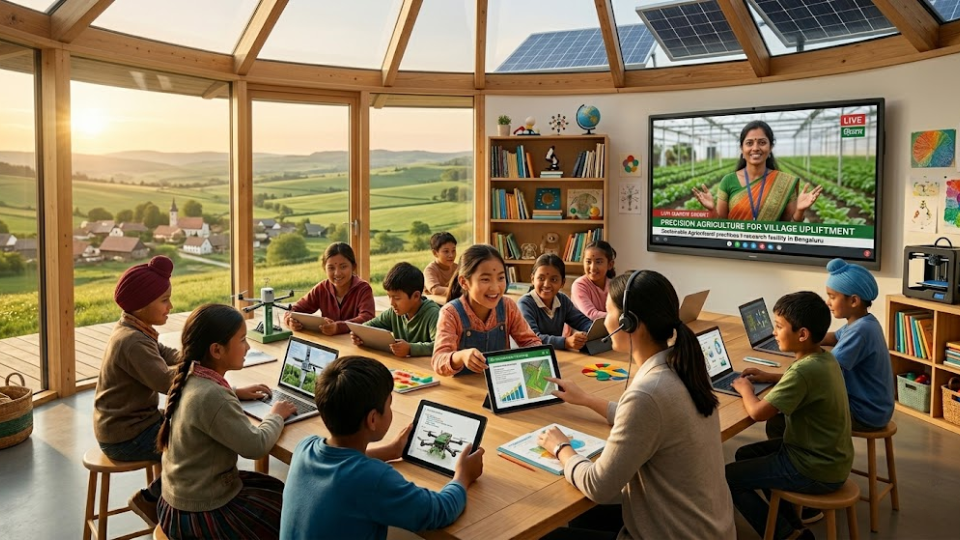
The digital era has made it possible to reduce the divide between rural and urban education. With the right infrastructure, rural students can access the same quality content as urban learners.
Digital education can:
- Bring expert teachers into rural classrooms through online platforms
- Provide interactive and engaging learning experiences
- Offer skill-based courses aligned with modern careers
- Eliminate geographical limitations
However, this requires investment in internet connectivity, devices, and digital literacy.
Empowering Rural Communities Through Education
When rural children are educated, the impact goes beyond individual success—it transforms entire communities.
1. Increased Awareness
Educated individuals are more aware of health, hygiene, and social issues, leading to better living standards.
2. Social Equality
Education reduces discrimination and promotes inclusivity within communities.
3. Community Development
Educated youth often return to their villages with knowledge, ideas, and leadership skills, driving local development.
The Importance of Teacher Quality
Quality education is not just about buildings or technology—it is about teachers. Skilled, passionate educators can inspire students, build confidence, and create a love for learning.
Rural areas need:
- Well-trained teachers
- Continuous professional development
- Incentives to attract and retain talent
A great teacher can change the trajectory of a child’s life, regardless of location.
Addressing the Challenges
While the need for equal education is clear, several challenges must be addressed:
- Poor infrastructure in rural schools
- Economic pressures forcing children to drop out
- Cultural barriers, especially for girls’ education
- Limited access to digital tools
Solving these challenges requires collaboration between governments, NGOs, private sectors, and local communities.
A Moral and National Responsibility
Providing equal education to rural children is not just an educational issue—it is a moral responsibility. Every child deserves the chance to dream, to learn, and to succeed.
From a national perspective, investing in rural education:
- Strengthens the workforce
- Boosts economic growth
- Reduces inequality
- Builds a more inclusive society
Ignoring rural education means ignoring a significant portion of a country’s potential.
The Way Forward: Creating Equal Educational Opportunities
To ensure rural children receive the same quality education as urban students, we must:
1. Improve Infrastructure
Build and upgrade schools with proper facilities.
2. Expand Digital Access
Provide affordable internet and devices to rural areas.
3. Train and Support Teachers
Ensure teachers are equipped to deliver high-quality education.
4. Encourage Community Participation
Engage parents and local leaders in promoting education.
5. Focus on Skill-Based Learning
Prepare students for real-world challenges and careers.
Conclusion: Equality in Education is Equality in Opportunity
Rural children do not ask for special treatment—they ask for fairness. They ask for the same chance to learn, grow, and succeed as any other child.
When we provide equal quality education, we are not just educating individuals—we are building a stronger, smarter, and more equitable future.
The question is not whether rural children deserve equal education.
The answer is clear—they absolutely do.
The real question is: Are we ready to make it happen?