Education
🌍 Digital Learning in Villages: A New Hope for Rural Children 📚💡
🌅 Introduction: A New Sunrise in Rural Education
In the peaceful villages surrounded by green farms, rivers, mountains, and dusty roads, millions of children wake up every morning carrying dreams bigger than the world around them. Some dream of becoming doctors 👨⚕️, engineers 👩💻, teachers 👨🏫, scientists 🔬, artists 🎨, or entrepreneurs 🚀. Yet for decades, rural children faced one major obstacle — lack of access to quality education.
Many village schools struggled with broken classrooms, outdated books, poor infrastructure, limited teachers, and almost no exposure to modern educational methods. While students in big cities enjoyed smart classrooms, computer labs, and advanced learning systems, rural students often depended entirely on chalkboards and old textbooks.
But today, a silent revolution is changing this reality.
✨ Digital learning has become a powerful ray of hope for rural children.
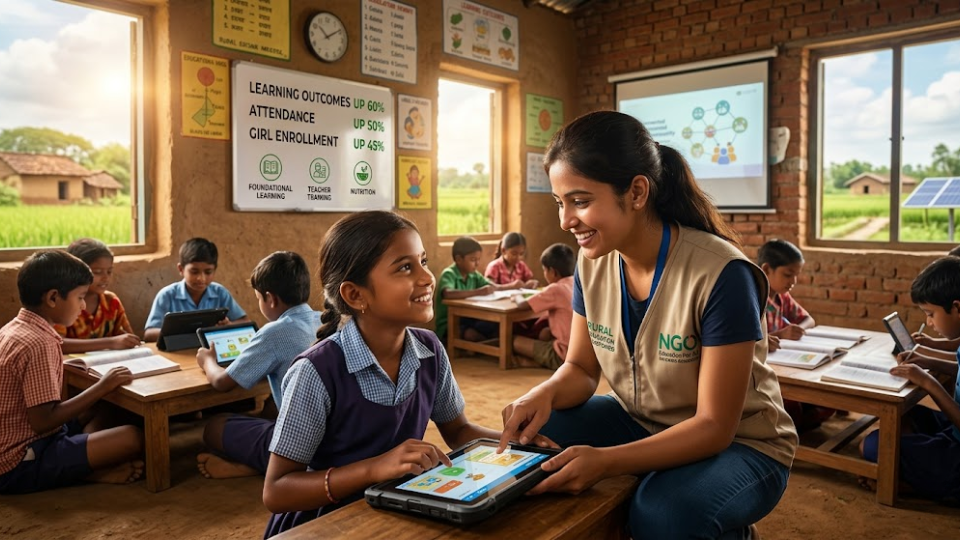
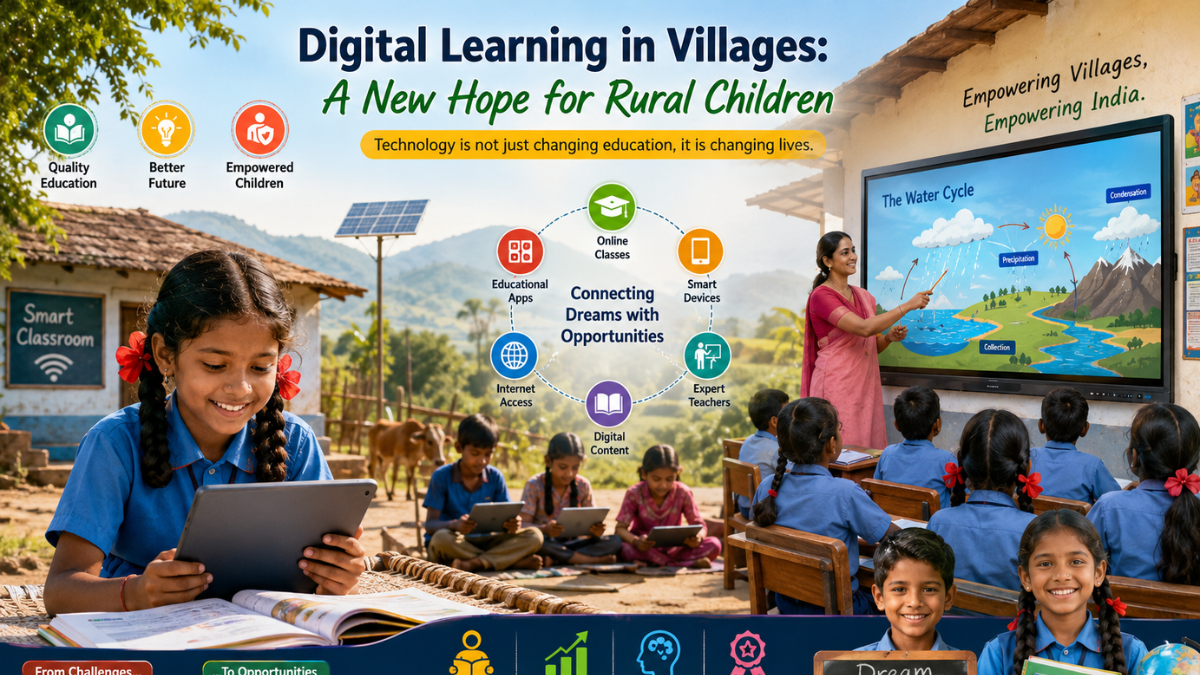
Through smartphones 📱, internet connectivity 🌐, online classes 💻, educational apps 📲, and smart classrooms 🖥️, knowledge is reaching villages like never before. A child living in a remote village can now learn from world-class teachers, watch educational animations, attend online classes, and explore unlimited information directly from a mobile phone.
This transformation is not just about technology.
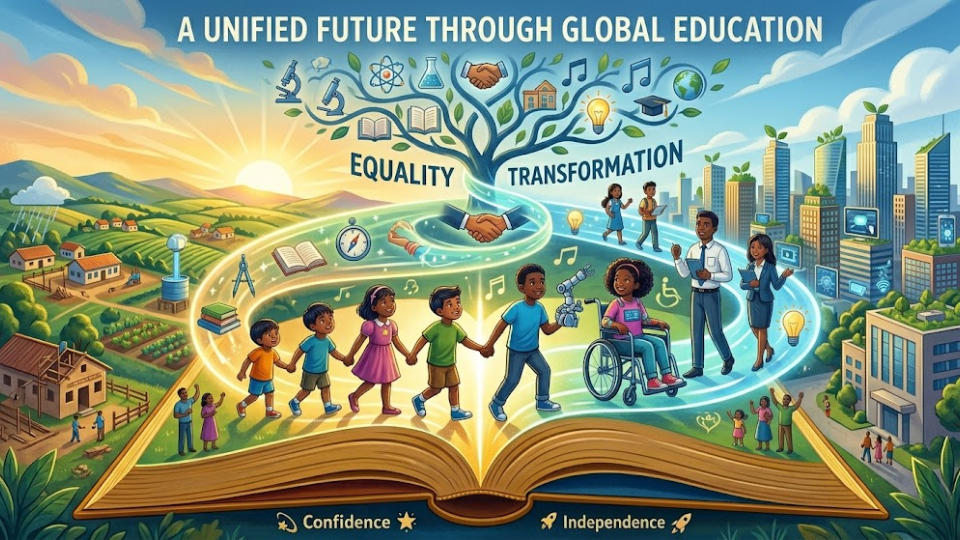
It is about equality ❤️
It is about opportunity 🌟
It is about changing lives forever.
🏡 Rural Education Before the Digital Revolution
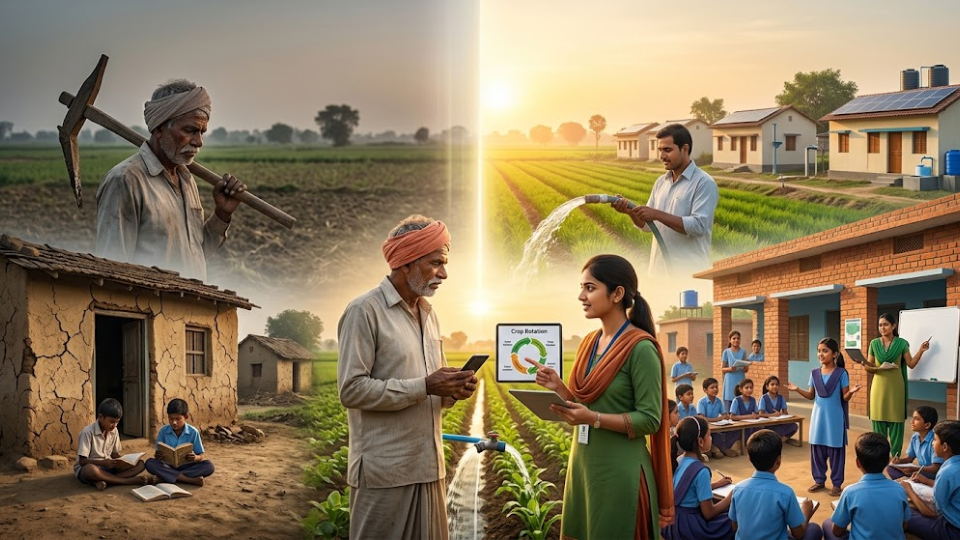
Before technology entered villages, education in rural areas faced serious limitations. Many students had to travel long distances just to attend school. Some schools lacked proper seating arrangements, electricity, science laboratories, and even enough teachers.
Children often studied through rote memorization instead of understanding concepts deeply. Learning became stressful rather than exciting.
📊 Traditional Rural Education Challenges
| 🚫 Problems in Rural Education | 📉 Impact on Students |
|---|---|
| Lack of teachers 👨🏫 | Weak subject understanding |
| No internet 🌐❌ | Limited knowledge exposure |
| Poor infrastructure 🏚️ | Low motivation |
| Outdated books 📚 | Old learning methods |
| No smart classrooms 🖥️❌ | Less interactive learning |
| Financial difficulties 💰 | School dropouts |
For many rural students, dreams remained limited because opportunities were limited.
🌐 The Arrival of Digital Learning
The arrival of smartphones and affordable internet changed everything.
What began as simple communication technology slowly became an educational revolution. Children started watching educational videos on YouTube, attending live online classes, and using learning apps to solve mathematics and science problems.
Now education is no longer limited by geography.
📍A village child can learn from anywhere.
📍Knowledge is available 24×7.
📍Learning has become interactive and engaging.
📱 Smartphones: The Pocket Classroom
Today, smartphones have become mini classrooms for rural students.
A simple mobile device now provides access to:
- 🎥 Educational videos
- 🧠 Interactive quizzes
- 🌍 Global educational content
- 📝 Online homework
- 🗣️ Spoken English practice
- 💻 Coding tutorials
- 📚 Digital libraries
Children who once depended entirely on physical books now carry unlimited knowledge inside their pockets.
🔄 Transformation of Learning
📌 Old Learning System vs Modern Digital Learning
| 📚 Traditional Learning | 💻 Digital Learning |
|---|---|
| Reading only | Visual + Audio learning |
| Memorization | Understanding concepts |
| Limited teacher access | Global teacher access |
| Fixed classroom learning | Anytime learning |
| Textbook dependent | Interactive content |
| Less engagement | High engagement |
🧠 How Digital Learning Improves Understanding
              📚 Traditional Learning
                        │
                        ▼
               Reading & Memorizing
                        │
                        ▼
               Limited Understanding 😕

────────────────────────────────────────────

                 💻 Digital Learning
                        │
        ┌───────────────┼───────────────┐
        ▼               ▼               ▼
      🎥 Video        🔊 Audio       ✍️ Interaction
        │               │               │
        └───────────────┼───────────────┘
                        ▼
              Better Understanding 😃
                        │
                        ▼
               Higher Confidence 🚀
🎯 Why Children Enjoy Digital Learning
Digital education feels exciting because it combines:
- 🎨 Visual graphics
- 🎬 Animation
- 🔊 Audio explanation
- 🎮 Interactive learning
- 🧩 Educational games
Subjects that once seemed difficult become simple and enjoyable.
For example:
- 🌌 Science becomes visual through experiments
- ➗ Mathematics becomes interactive
- 🌍 Geography becomes easier through maps
- 📖 History becomes interesting through storytelling
Learning becomes fun instead of fear.
👧 Empowering Rural Girls Through Technology
Digital learning is especially important for girls in villages.
In many rural areas, girls face challenges like:
- 🚶 Long travel distances
- 💰 Financial issues
- ⚠️ Safety concerns
- 🏠 Household responsibilities
Online learning allows girls to continue education from home while accessing quality study material.
👩🎓 Impact on Girls’ Education
| 🌸 Benefits for Girls | ✨ Positive Change |
|---|---|
| Online learning from home | Safer education |
| Access to skill courses | Career growth |
| Digital awareness | Confidence building |
| Flexible study timing | More participation |
| Global exposure | Bigger dreams |
Technology is helping girls become more independent, skilled, and confident.
📈 Growth of Digital Education in Villages
2010 📉  Minimal Internet Access
        │
        ▼
2015 📶 Smartphones Enter Villages
        │
        ▼
2020 💻 Online Classes Increase
        │
        ▼
2023 🌐 Smart Learning Expansion
        │
        ▼
2026 🚀 Digital Education Revolution
🏫 Smart Classrooms in Villages
Modern village schools are slowly introducing:
- 🖥️ Smart boards
- 📽️ Projectors
- 📱 Tablets
- 🌐 Internet classrooms
- 🎧 Audio-visual learning
This creates a more engaging environment where children become active learners instead of passive listeners.
🔵 Circle Diagram: Digital Learning Ecosystem
                    🌐 INTERNET
                         ⭕
          ⭕ Smartphones          ⭕ Tablets

     ⭕ Educational Apps      ⭕ Online Classes

           ⭕ Teachers & Students
                         ⭕
                  📚 KNOWLEDGE
This ecosystem connects students, teachers, technology, and information together.
⚡ Challenges Still Facing Rural Digital Education
Even though digital learning is growing rapidly, several challenges still remain.
🚧 Major Challenges
| ⚠️ Problem | 📉 Effect |
|---|---|
| Weak internet connectivity 🌐 | Interrupted learning |
| Expensive devices 💰 | Limited access |
| Electricity issues ⚡ | Online class disruptions |
| Lack of digital literacy 🧠 | Technology fear |
| Language barriers 🗣️ | Reduced understanding |
These problems require support from governments, NGOs, and communities.
🚀 The Future of Rural Education
The future of digital education is incredibly exciting.
Village classrooms may soon include:
- 🤖 AI-powered teaching
- 🥽 Virtual reality learning
- 🧠 Personalized learning systems
- 🔬 Virtual science labs
- 🌍 Global online collaboration
- 💡 Smart educational platforms
Children from villages may compete globally in technology, innovation, and entrepreneurship.
📊 Impact of Digital Learning on Students
| 📌 Area | 📈 Improvement |
|---|---|
| Confidence 😃 | High |
| Subject understanding 📚 | Better |
| Communication 🗣️ | Improved |
| Creativity 🎨 | Increased |
| Career awareness 🚀 | Expanded |
| Digital skills 💻 | Stronger |
❤️ The Human Side of Digital Learning
The greatest power of digital learning is not technology itself.
It is hope.
Hope for:
- Better education 📚
- Better jobs 💼
- Better future 🌟
- Better life ❤️
A rural child who once felt disconnected from the world can now dream without limits.
That emotional transformation is priceless.
🌟 Conclusion
Digital learning in villages is one of the most important educational revolutions of modern times. It is breaking barriers, reducing inequality, and opening doors for millions of rural children.
Technology is proving that talent exists everywhere — even in the smallest villages. What children need is opportunity, guidance, and access to knowledge.
Through smartphones, online classes, smart classrooms, and internet connectivity, education is slowly becoming equal for everyone.
The journey is still ongoing. Challenges remain. But the future is bright.
The villages of today may create the scientists, innovators, entrepreneurs, and leaders of tomorrow.
And digital learning is lighting the path toward that future. 🌍✨
💬 Final Inspirational Quote
🌱 “When technology reaches a rural classroom, it does not simply teach lessons — it changes destinies.”