Impact Story
🌾 The Role of NGOs in Transforming Rural Education in India
India’s rural education system sits at a complex crossroads—rich in potential, yet burdened by infrastructural gaps, teacher shortages, socio-economic barriers, and digital divides. While government initiatives have laid a strong foundation, it is the persistent, grassroots-driven work of non-governmental organizations (NGOs) that has been quietly rewriting the narrative of rural education.
Organizations like Pratham, Teach For India, and Akshaya Patra Foundation are not just supplementing the system—they are transforming it from within.
🌱 Understanding the Rural Education Challenge
Before diving into solutions, it’s essential to understand the reality:
- 📉 Low learning outcomes despite school enrollment
- 🏫 Poor infrastructure and lack of resources
- 👩🏫 Teacher absenteeism and limited training
- 💻 Minimal access to digital education
- 👨👩👧 Socio-economic pressures forcing early dropouts
Rural education is not just an academic issue—it is deeply connected to poverty, gender inequality, and lack of awareness.
🔄 The NGO Intervention Model
NGOs operate differently from traditional systems. Their approach is:
Problem Identification → Community Engagement → Innovative Solution → Scalable ImpactThey work at the grassroots level, understanding local contexts and customizing solutions instead of applying one-size-fits-all models.
📊 Impact of NGOs on Rural Education (Illustrative)
🧠 Key Areas Where NGOs Are Transforming Rural Education
1. 📚 Foundational Learning & Literacy
Organizations like Pratham have revolutionized early education through programs like Teaching at the Right Level (TaRL).
Instead of focusing on age-based curriculum:
- Students are grouped by learning levels
- Focus is on basic reading & arithmetic
- Rapid improvement in comprehension
📌 Result: Children who couldn’t read simple sentences begin reading fluently within months.
2. 👩🏫 Teacher Training & Capacity Building
NGOs train teachers to become facilitators rather than just instructors.
Teach For India brings young professionals into classrooms, introducing:
- Modern teaching methodologies
- Leadership-driven education
- Student-centric learning environments
📌 Result: Improved engagement, creativity, and critical thinking among students.
3. 🍛 Nutrition & School Retention
Education cannot thrive without proper nutrition.
The Akshaya Patra Foundation addresses this through large-scale mid-day meal programs.
Nutrition → Better Health → Improved Concentration → Higher Attendance📌 Result: Increased school attendance and reduced dropout rates.
4. 💻 Digital & EdTech Inclusion
Many NGOs are bridging the digital divide by:
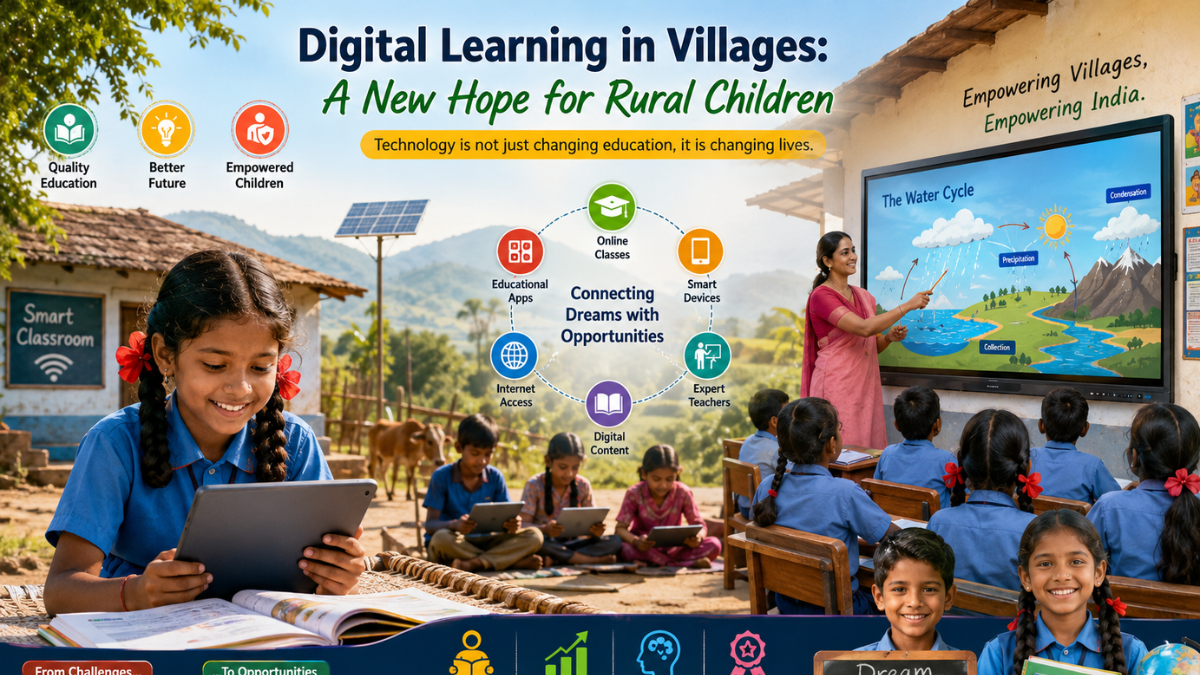
- Setting up smart classrooms
- Providing tablets and digital content
- Teaching basic computer literacy
Some initiatives even use offline digital servers in remote areas with no internet.
📌 Result: Rural students gaining exposure to global knowledge systems.
5. 👧 Empowering Girls Through Education
NGOs actively work on:
- Awareness campaigns for girls’ education
- Providing scholarships and sanitary support
- Ensuring safe school environments
📌 Result: Rise in female literacy and delayed child marriages.
🧩 NGO vs Traditional System (Comparison Table)
| Aspect | Traditional System 🏫 | NGO Approach 🌍 |
|---|---|---|
| Teaching Style | Curriculum-focused | Learning-focused |
| Flexibility | Rigid | Highly adaptive |
| Community Involvement | Limited | Strong engagement |
| Innovation | Slow | Rapid & experimental |
| Accountability | Bureaucratic | Outcome-driven |
🔗 Collaborative Ecosystem: NGOs + Government
The most powerful transformation happens when NGOs and government work together.
For example:
- NGOs help implement programs under Sarva Shiksha Abhiyan
- Provide on-ground data and insights
- Pilot innovative models that governments later scale
This synergy creates sustainable, long-term impact.
🌍 Case Study Snapshot
📍 Rural Maharashtra
- NGO introduced digital classrooms
- Local youth trained as educators
- Community awareness programs conducted
📈 Outcomes:
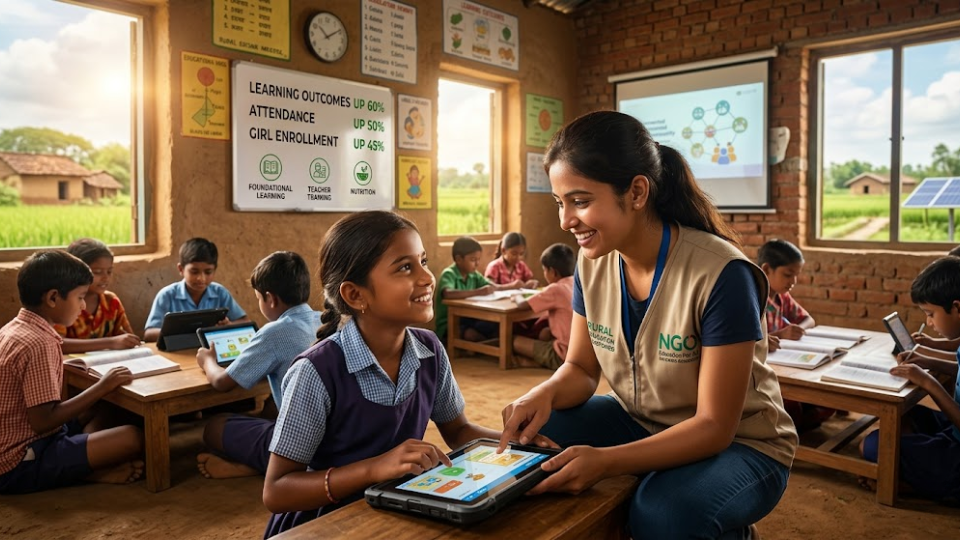
- Attendance increased by 48%
- Dropout reduced by 30%
- Students participating in state-level competitions
🚀 The Road Ahead
Despite remarkable progress, challenges remain:
- Scaling successful models nationwide
- Ensuring long-term funding
- Integrating technology sustainably
- Strengthening public-private partnerships
But the trajectory is clear—NGOs are not just filling gaps; they are redefining the education ecosystem.
✨ Conclusion
The transformation of rural education in India is not a single-story success. It is a collective effort—where NGOs act as catalysts, innovators, and change-makers.
They bring:
- ❤️ Empathy
- 💡 Innovation
- 🤝 Community trust
- 📈 Measurable impact
In many villages, the presence of an NGO is the difference between education as a system and education as an opportunity.
📌 Final Thought
“If India has to grow inclusively, its villages must learn effectively—and NGOs are ensuring that learning is not a privilege, but a right.”