In the quiet stretches of rural landscapes—where fields replace skylines and traditions shape daily life—there exists an untapped reservoir of human potential. These regions are rich in culture, labor, and resilience, yet they often remain on the margins of economic and social progress. At the core of this disparity lies one powerful, often underestimated barrier: lack of education.
Education is far more than the ability to read and write. It is the foundation upon which individuals build their livelihoods, make informed decisions, and participate meaningfully in society. In rural areas, where access to resources is already limited, the absence of education becomes a multiplier of disadvantage—intensifying poverty, restricting opportunity, and slowing development across generations.
🌍 The Invisible Wall Holding Rural Communities Back
When a child in a rural village is denied education, the consequences ripple far beyond the individual. That child grows into an adult with limited employment options, often confined to low-paying, labor-intensive work. Without education, there is little exposure to new ideas, modern technologies, or financial systems. This creates a cycle where poverty is not just a condition, but a continuation.
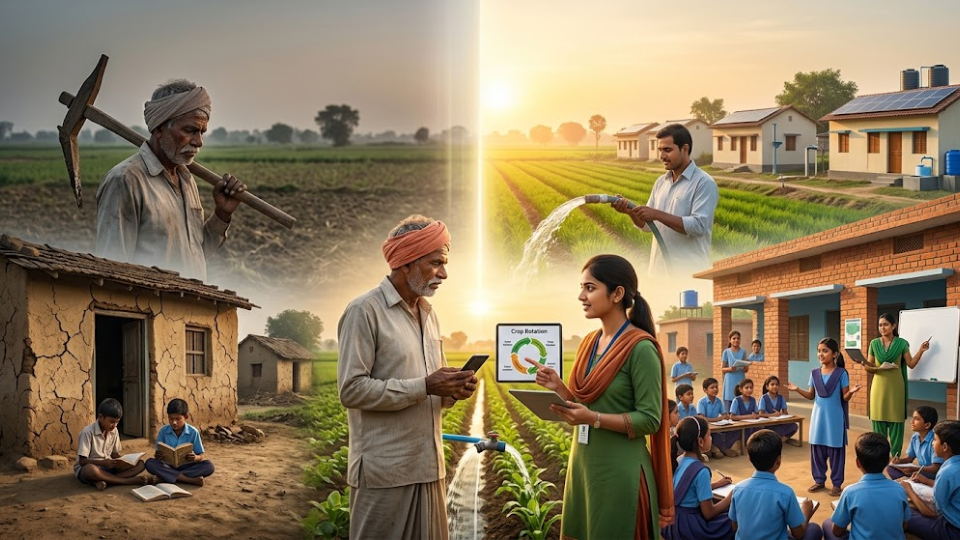
Imagine a farmer who has tilled land for decades but has never been exposed to modern agricultural practices. Without knowledge of improved seeds, irrigation techniques, or government schemes, productivity remains low. Income stagnates. Opportunities for growth disappear. This is not due to lack of effort—but lack of education.
📊 The Development Divide
Below is a simple comparison that highlights how education transforms key aspects of rural life:
This contrast clearly shows that education is not just one factor among many—it is the driving force behind all others.
🔁 The Cycle of Rural Underdevelopment
One of the most critical aspects of this issue is how self-perpetuating it becomes. Lack of education creates a cycle that is incredibly difficult to break:
This cycle explains why many rural communities remain underdeveloped for decades. Without intervention, each generation inherits the same limitations as the last.
🏥 When Knowledge is Missing, Health Suffers
Education plays a crucial role in shaping health outcomes. In rural areas where education is lacking, awareness about hygiene, nutrition, and disease prevention is often minimal. This leads to higher rates of malnutrition, preventable diseases, and even infant mortality.
A mother who has never been educated may not fully understand the importance of vaccinations or balanced nutrition. A family may rely on traditional remedies instead of seeking medical help, not out of choice, but due to lack of awareness. Education bridges this gap, transforming not just individual lives but entire communities.
👩 The Gender Gap: Education as Empowerment
Perhaps the most profound impact of education is seen in the lives of women. In many rural regions, girls are still denied access to education due to social norms and economic pressures. Early marriages, limited mobility, and lack of decision-making power are common realities.
However, when a girl is educated, everything changes.
An educated woman is more likely to:
- Support her children’s education
- Contribute to household income
- Make informed health decisions
- Participate in community leadership
Educating women doesn’t just uplift individuals—it reshapes the social fabric of rural society.
🌐 The Digital Divide in the Modern World
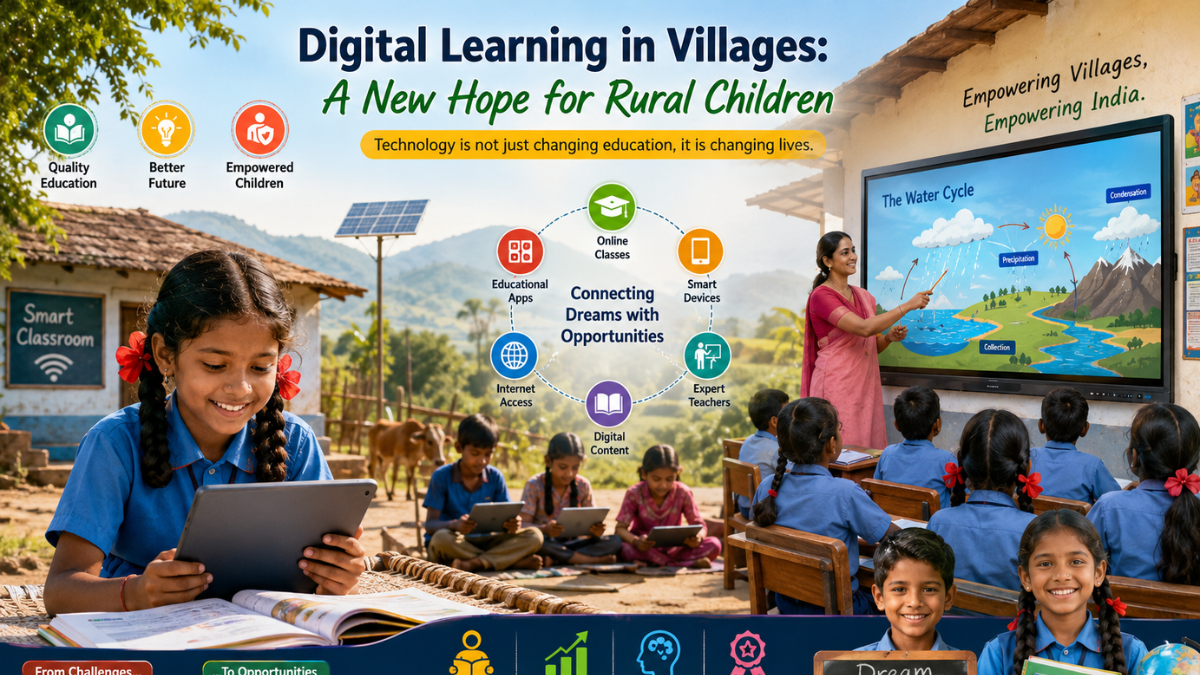
In today’s technology-driven era, education is the gateway to digital inclusion. Without basic literacy and skills, rural populations are excluded from the digital economy. They cannot access online services, digital payments, e-learning platforms, or government benefits.
This creates a new form of inequality—not just economic, but informational. While urban populations move forward with innovation, rural communities risk being left even further behind.
🚧 Why Education Remains Out of Reach
The lack of education in rural areas is not accidental—it is the result of multiple overlapping challenges.
In many villages, schools are either too far away or lack basic infrastructure. Classrooms may be overcrowded, under-resourced, or entirely absent. Teachers are often scarce, and quality education becomes a luxury rather than a right.
Financial constraints also play a major role. For families struggling to meet daily needs, sending children to school can seem less urgent than putting food on the table. Children are often pulled into labor to support household income.
Cultural factors further complicate the issue. In some communities, education—especially for girls—is not seen as a priority. Traditions and long-standing beliefs continue to shape decisions, even when they limit future opportunities.
📉 Understanding the Root Causes
Each of these factors reinforces the others, creating a complex web that keeps education out of reach.
🌱 A Path Forward: Education as the Catalyst for Change
Despite these challenges, the solution is both clear and powerful: invest in education.
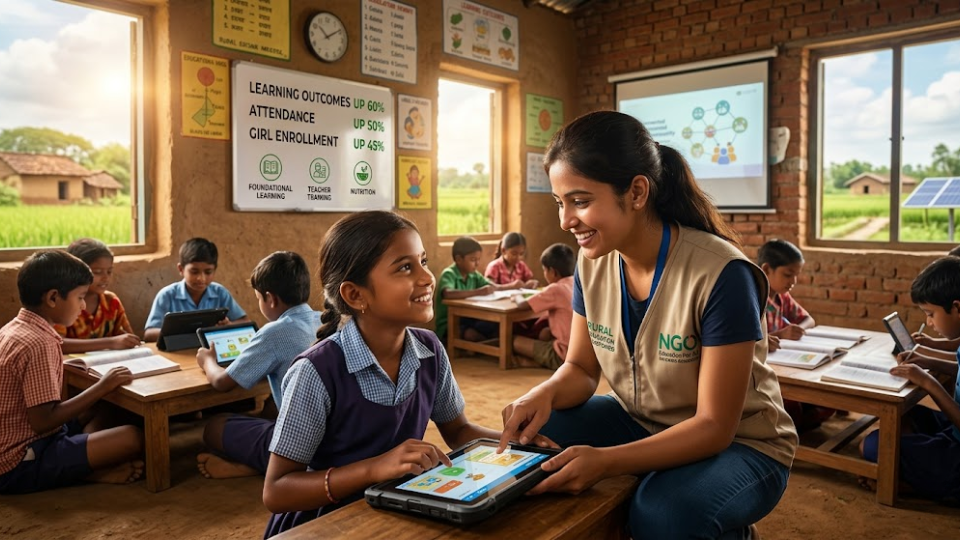
When schools are built closer to communities, when teachers are trained and supported, and when families are made aware of the long-term benefits, change begins to take root. Digital education platforms can bridge geographical gaps. Government initiatives and community participation can ensure that no child is left behind.
Education has the unique ability to create self-sustaining development. Once individuals are educated, they contribute back to their communities—economically, socially, and intellectually.
🌟 The Transformation Education Brings
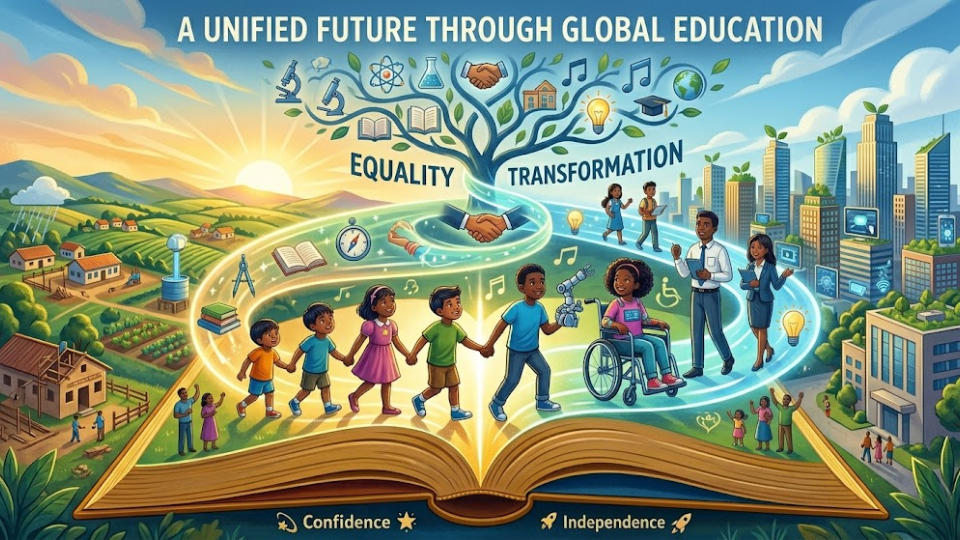
When education reaches rural areas, the impact is transformative:
- Farmers adopt modern techniques and increase productivity
- Youth find skilled employment or start businesses
- Women gain independence and leadership roles
- Health improves across generations
- Entire communities move toward sustainable development
Education does not just change lives—it changes futures.
📌 Conclusion: The Foundation of Every Solution
Rural development is a complex challenge, involving infrastructure, healthcare, economy, and governance. But at the heart of all these lies one fundamental truth:
👉 Without education, no development effort can reach its full potential.
Education is not just a sector—it is the foundation upon which every other sector depends. Addressing the lack of education in rural areas is not merely an option; it is an urgent necessity.
✨ Final Reflection
The progress of a nation is not measured by its cities alone, but by the strength of its villages. And the strength of those villages depends on one simple yet powerful tool—education.
“Educate a village, and you empower generations.”