Impact Story
Breaking the Barrier: How Education Can Change Rural India’s Future
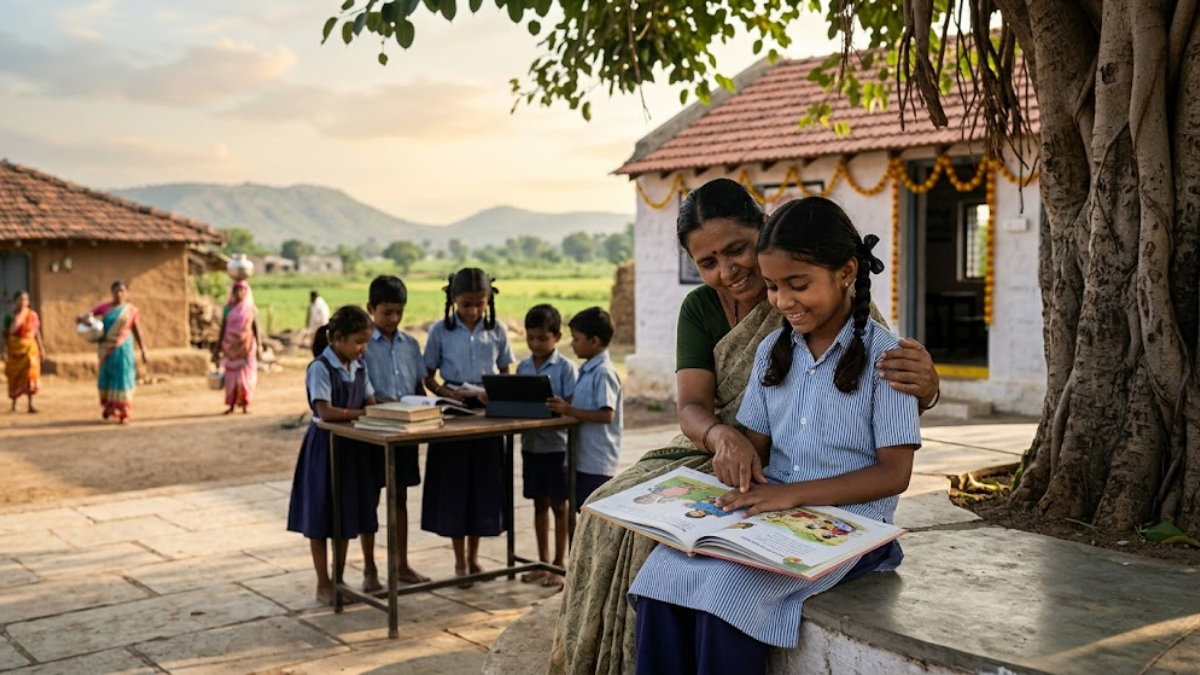
In many corners of rural India, the story of life often begins in silence—fields at dawn, long walks to school, limited resources, and dreams that quietly struggle to find space to grow. Yet within this silence lies an extraordinary power waiting to be awakened: education. Not just as a system of books and exams, but as a transformative force capable of rewriting destinies, reshaping communities, and redefining the future of entire villages.
Breaking the Barrier: Education as the First Revolution
For rural India, barriers are not just physical distances or lack of infrastructure—they are often generational cycles. When families have lived for decades with limited access to quality education, it becomes difficult to imagine a different reality. Many children grow up believing that farming, daily wage labor, or early dropout from school are not just choices, but inevitabilities.
But education, when it reaches these spaces meaningfully, does something powerful—it interrupts the cycle. It introduces possibility where there was once limitation. A child who learns to read fluently in a village school is not just learning language; they are learning access—to information, to opportunity, and to a wider world that exists beyond their immediate surroundings.
The Classroom as a Gateway, Not a Boundary
In rural India, a classroom is often more than a room with desks. It becomes a gateway to imagination. When a teacher introduces science concepts using everyday examples—a seed becoming a plant, rainfall shaping agriculture, electricity lighting homes—the abstract becomes real. Learning begins to feel relevant rather than distant.
The true transformation happens when education connects with life itself. A student who understands mathematics starts seeing it in crop yield calculations. A student learning English begins to access digital platforms, government schemes, and global knowledge. Slowly, education stops being a subject and becomes a tool for survival and growth.
The Ripple Effect of One Educated Child
One of the most underestimated truths about education is its ripple effect. When even one child in a rural household becomes educated, the impact rarely stops with that child. It spreads quietly but powerfully across the family and eventually the entire community.
An educated child often becomes the first guide for siblings, the first voice to question outdated practices, and sometimes the first professional in the family. Over time, this creates a shift in mindset—parents begin to prioritize schooling, younger children are encouraged to stay in education longer, and communities begin to value learning as an asset rather than an obligation.
In many villages across India, this ripple effect has already begun. A single teacher, a single motivated student, or a single supportive initiative has been enough to change the trajectory of dozens of lives.
Technology: Bridging the Long-Standing Divide
Earlier, rural education was limited by geography. Today, technology is slowly breaking that barrier. Even in remote areas, mobile phones, digital classrooms, and online learning platforms are becoming increasingly accessible.
A student sitting in a small village can now watch lectures from top educators, learn new skills, and explore subjects that were once unavailable in local schools. While challenges like internet access and device availability still exist, the direction is clear—technology is shrinking the distance between rural and urban education.
More importantly, it is not just delivering content; it is delivering confidence. When a rural student realizes they are learning the same material as students in cities, their perception of limitation begins to dissolve.
Teachers: The Silent Architects of Change
Behind every transformation in rural education stands a teacher who often works beyond limitations. In villages where resources are scarce, teachers become mentors, motivators, counselors, and sometimes even community leaders.
Their role goes beyond syllabus completion. They are shaping mindsets, building discipline, and instilling belief. A single encouraging word from a teacher can sometimes be the difference between a child dropping out and continuing their education.
In many cases, teachers become the first representation of aspiration for students. They prove that education itself is not just about learning—it is about becoming.
Education and Economic Transformation
When education enters a rural ecosystem, it gradually transforms the economy of the entire region. Educated youth are not limited to traditional roles; they begin exploring entrepreneurship, skilled jobs, digital work, and government opportunities.
This diversification reduces dependency on a single source of income and introduces financial stability. Over time, educated individuals reinvest in their communities—opening small businesses, improving infrastructure, and supporting further education for others.
Thus, education does not just change individuals; it slowly reshapes the economic identity of a village.
Challenges That Still Remain
Despite progress, the path is not without obstacles. Infrastructure gaps, teacher shortages, economic pressure on families, and early dropouts continue to affect rural education. In some areas, education is still seen as secondary to immediate income needs.
However, the presence of these challenges does not weaken the importance of education—it highlights its urgency. Every barrier that exists today is a reminder of how much potential remains untapped.
The Future Being Written Today
The future of rural India is not something distant—it is being written every single day in small classrooms, under trees, in modest school buildings, and through digital screens powered by fragile connectivity.
Every child who learns to read, every girl who continues her schooling, every family that chooses education over early labor, is contributing to a larger transformation that will define the next generation.
Education is not just changing rural India—it is redefining what rural India can become.
And perhaps the most powerful truth of all is this: the change does not begin in policy alone, or in institutions alone. It begins the moment a child in a quiet village realizes that their future is not limited by where they are born, but expanded by what they choose to learn.