Education
How Digital Learning is Changing Rural Education in India
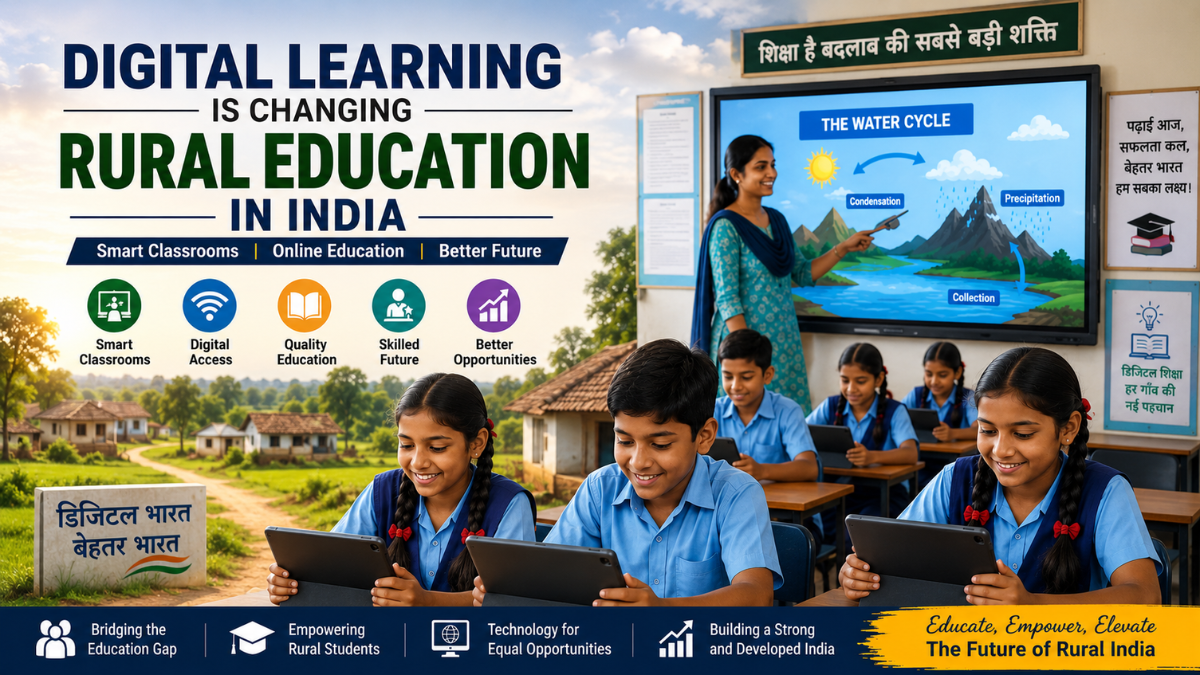
India is standing at the center of a major educational revolution. Over the last decade, the country has experienced rapid technological growth, and this transformation is now reaching the villages where millions of children live. What was once considered impossible is slowly becoming reality — students in rural areas can now access quality education through smartphones, smart classrooms, online platforms, and digital learning tools.
For many years, rural education in India faced serious challenges. Villages struggled with lack of qualified teachers, outdated teaching methods, poor infrastructure, limited educational resources, and low access to technology. Students living in remote areas often had dreams bigger than their circumstances, but opportunities were limited.
Today, digital learning in rural India is changing this entire ecosystem.
Technology is no longer only available in big cities. Even small villages are slowly becoming part of India’s digital future. Affordable internet, low-cost smartphones, government initiatives, digital education NGOs, and online learning platforms are helping students gain access to modern education like never before.
This transformation is not only improving classrooms — it is changing lives, building confidence, reducing inequality, and creating new opportunities for the next generation.
The Evolution of Rural Education in India
To understand the importance of digital education, it is necessary to understand the condition of rural education in the past.
For decades, rural schools suffered from:
- Shortage of teachers
- Lack of proper classrooms
- Poor educational materials
- Low digital awareness
- Limited career guidance
- Weak internet connectivity
- Lack of libraries and laboratories
- High dropout rates
Many students had to walk several kilometers just to attend school. Some schools had only one teacher managing multiple classes. In many villages, students had never even touched a computer.
Because of these limitations, the gap between urban and rural education continued increasing.
Urban students had access to:
- Advanced coaching institutes
- Modern schools
- Smart learning systems
- English communication training
- Computer education
- Digital libraries
- Online learning platforms
Meanwhile, rural students often struggled to access basic educational resources.
But the rise of education technology in villages is now helping bridge this gap faster than ever before.
What is Digital Learning in Rural India?
Digital learning in rural India refers to the use of technology-based educational methods to improve learning experiences in villages and remote communities.
This includes:
- Online classes
- Smart classrooms
- Educational mobile applications
- E-learning platforms
- Digital study materials
- Interactive video lessons
- Virtual classrooms
- AI-based learning systems
- Online assessments
- Digital skill training
Digital learning allows students to access education beyond the limitations of traditional classrooms.
Instead of depending only on textbooks and local teachers, students can now learn through:
- Recorded lectures
- Live online sessions
- Educational YouTube channels
- Skill-based courses
- Interactive animations
- National learning platforms
This creates equal opportunities for students regardless of location.
Why Digital Education is Important for Rural India
Education is one of the strongest tools for social and economic development. However, without access to quality education, rural communities often remain trapped in cycles of poverty and limited opportunities.
Digital education helps solve this problem by bringing knowledge directly to students.
Equal Learning Opportunities
Technology allows rural students to access the same educational content available in urban cities.
A student from a small village can now:
- Learn coding online
- Attend IIT preparation classes
- Improve spoken English
- Access digital libraries
- Learn computer skills
- Watch science experiments virtually
- Join online career development programs
This level of access was unimaginable just a few years ago.
Online Education for Villages is Creating a New Learning Culture
One of the biggest advantages of technology is flexibility.
Online education for villages allows students to learn anytime and anywhere.
This is especially important because many rural students:
- Help their families in farming or household work
- Travel long distances to school
- Face transportation challenges
- Have limited tuition options nearby
Online learning platforms solve many of these problems by making education accessible from home.
Students can:
- Watch recorded lectures repeatedly
- Study according to their own pace
- Learn through mobile devices
- Practice tests online
- Access free educational content
Parents are also becoming more aware of the importance of digital education because they can now see visible improvements in their children’s confidence and learning abilities.
Smart Learning Rural India: The Rise of Smart Classrooms
Smart learning rural India initiatives are changing the traditional education model completely.
Earlier, classroom teaching depended mainly on blackboards and textbooks. Today, many schools are adopting modern teaching technologies such as:
- Smart boards
- Projectors
- Educational software
- Digital attendance systems
- Tablet-based learning
- Computer labs
- Virtual learning sessions
These tools make education more interactive and engaging.
For example:
- Science concepts can be explained through animations
- Geography lessons can include digital maps
- Mathematics becomes easier with visual problem-solving
- Language learning improves through interactive exercises
Students understand concepts faster because visual learning improves memory retention and engagement.
Teachers also benefit because technology helps simplify teaching methods and classroom management.
How Smartphones are Transforming Village Education
The smartphone revolution has become one of the biggest reasons behind rural digital transformation.
Today, affordable smartphones are available in many rural households. Even if families cannot afford computers, mobile phones allow students to:
- Attend live online classes
- Watch educational videos
- Download learning applications
- Access PDF study materials
- Join educational communities
- Practice online tests
Mobile learning is becoming extremely powerful in villages because it removes infrastructure barriers.
Even a basic smartphone with internet access can become a complete digital classroom.
This is one of the main reasons why digital learning in rural India is growing rapidly.
The Role of Digital Education NGOs in Rural India
A digital education NGO plays a crucial role in improving educational opportunities for underprivileged communities.
Many NGOs are actively working to:
- Build smart classrooms
- Provide free computer education
- Train teachers in digital tools
- Donate tablets and computers
- Improve internet access
- Conduct digital literacy campaigns
- Support girls’ education
- Offer scholarship programs
These organizations are helping villages become digitally connected learning communities.
Many NGOs also focus on awareness because technology alone is not enough. Communities must understand how education can transform future generations.
Several NGOs are creating long-term educational impact by combining:
- Technology
- Community support
- Skill development
- Career guidance
- Digital empowerment
This integrated approach is creating sustainable educational development in rural India.
Education Technology in Villages is Reducing Educational Inequality
One of the biggest benefits of education technology in villages is that it reduces inequality.
Earlier, students from cities had significant advantages over rural students. They had better schools, coaching institutes, English exposure, and technological access.
Today, technology is slowly leveling the playing field.
Rural students can now:
- Learn from top educators online
- Access national-level educational content
- Participate in digital competitions
- Explore global knowledge resources
- Learn future-ready skills
This creates confidence among students because they realize their location no longer limits their learning potential.
Technology is helping rural students compete at national and even international levels.
The Future of Smart Learning Rural India
The future of rural education looks extremely promising.
In the coming years, villages may experience:
- AI-powered learning systems
- Personalized education platforms
- Virtual reality classrooms
- Regional language e-learning apps
- Advanced digital skill programs
- Online career counseling
- Remote expert teaching systems
- Smart village education centers
As internet access improves and digital awareness increases, rural India may become one of the fastest-growing digital education markets in the world.
How Digital Learning Can Transform Rural Economies
Education directly impacts economic development.
When rural students gain:
- Digital skills
- Communication abilities
- Technology awareness
- Professional knowledge
They become better prepared for:
- Employment opportunities
- Entrepreneurship
- Freelancing careers
- Online business opportunities
- Government job preparation
- Technology-based careers
Digital education can help reduce unemployment and migration by creating opportunities within rural communities.
Why Digital Learning is the Future of India
India has one of the world’s largest youth populations. To compete globally, the country needs a strong, skilled, and digitally educated generation.
Traditional education systems alone cannot meet future demands.
Digital learning is becoming essential because:
- The future job market is technology-driven
- Digital literacy is becoming a basic skill
- Online learning is expanding rapidly
- Global competition is increasing
- Modern industries require technological knowledge
This is why digital learning in rural India is not just a temporary trend — it is the foundation of future national development.
Conclusion
Digital education is changing the future of rural India in extraordinary ways.
From online education for villages to smart learning rural India initiatives, technology is creating opportunities that were once unimaginable for millions of students.
Digital classrooms, educational mobile apps, online courses, and education technology in villages are helping students learn faster, dream bigger, and build brighter futures.
The combined efforts of governments, digital education NGOs, educators, and technology companies are accelerating this transformation across the country.
Although challenges still exist, the progress is powerful and inspiring.
The future of rural India will not only depend on education — it will depend on digital education.
And this transformation has already begun.
Frequently Asked Questions (FAQs)
What is digital learning in rural India?
Digital learning in rural India refers to using technology such as smartphones, online classes, smart classrooms, and digital educational platforms to improve learning opportunities in villages.
How does online education help villages?
Online education for villages provides access to quality teachers, digital resources, recorded lectures, and skill-based learning opportunities.
What is a digital education NGO?
A digital education NGO works to improve educational access in rural areas through technology, digital classrooms, internet support, and skill development programs.
What is smart learning rural India?
Smart learning rural India uses modern digital tools such as smart boards, educational software, and online learning systems to improve classroom education.
Why is education technology important in villages?
Education technology in villages helps reduce educational inequality, improve digital literacy, and create better career opportunities for students.
What are the biggest challenges in rural digital education?
Major challenges include poor internet connectivity, lack of devices, electricity issues, financial limitations, and low digital awareness.
What is the future of digital education in villages?
The future includes AI learning systems, virtual classrooms, regional language e-learning, digital skill training, and advanced smart classroom technologies.